
What happens to food when it goes to the garbage, and what can I do about it?
When food gets put into the garbage, it gets trapped and can’t decompose properly. When it can’t decompose, it creates methane, which is a harmful greenhouse gas.
Methane has a shorter lifespan but has more of a warming effect than CO2. If food waste were a country, it would be the third largest greenhouse gas emitter, right behind China and the United States. Composting or reducing food waste altogether is an easy step everyone can take to better protect our climate from greenhouse gases that contribute to climate change.
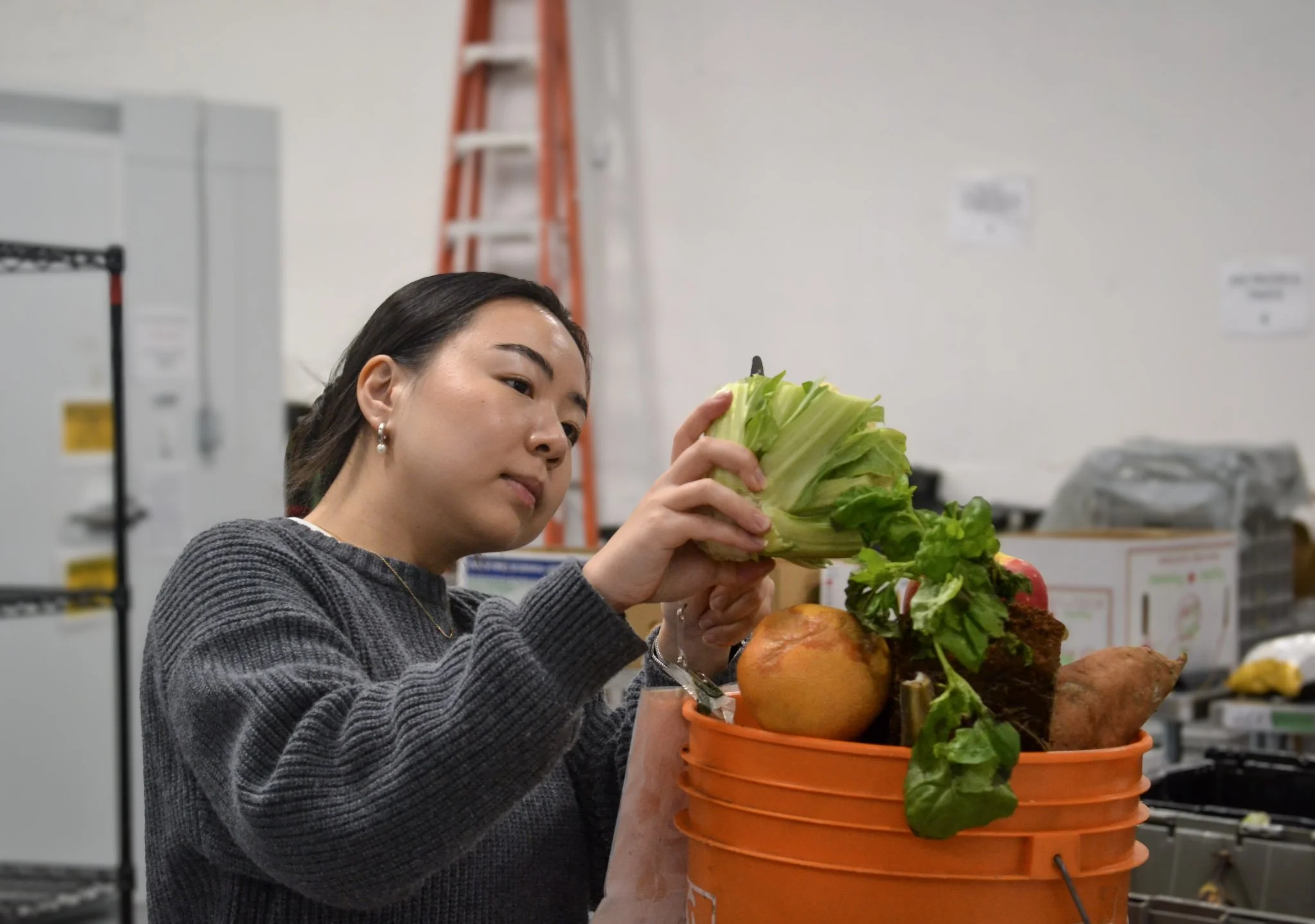
For those who compost, it often becomes second nature - asking your friend ‘where is your compost?’ when cleaning up or making sure to clear your takeout container before tossing it in the garbage.
But in British Columbia, nearly 40% of the material sent to landfills is still food waste. Which isn’t great news for our fight against climate change.
The best-case scenario is that food never ends up in our landfills; instead, we can
Try to reduce your food waste by buying less
Only buying the food you know you’ll have time to cook and eat before it has to be composted
Meal planning
Try to plan 3 meals for the week and only buy groceries that can be used for these meals
Eating leftovers
Fun tip! Try to make your leftovers exciting, adding a fried egg or cheese, something to make it different than the night before
Donating edible food to organizations like Food Stash Foundation or a Community Fridge
Food Stash Foundation works with grocery stores to pick up surplus food that could have ended up in the landfill. Each month, we are rescuing 140,000+ pounds of good food to share with our community
Feeding animals
And of course composting!
Find out what items can be composted by searching for your city + composting guidelines. Here is a link to Vancouvers
Preventing food waste from ending up in the landfill is one simple way to protect our Earth from climate change. If you’d like to learn more about preventing food waste, sign up for our newsletter
-
Yes! By composting, you are ensuring that food waste can break down properly, avoiding methane from being released. Methane is a harmful greenhouse gas that has a warming effect on our climate.
-
You have to check your city's specific requirements!
In Vancouver, items like:
Cat litter
Dirt, rocks, soil, or sod
Large volumes of cooking oil
Pet waste
Large branches of pruning
-
There are options! Here are couple of our favourites:
Worm composting (requires some trial and error)
Backyard composter (affordable options often sold by the City)
Counter composter (perfect for apartment composting)
Written by Anna Gray, Food Stash Foundation’s Communications Specialist - July 2026